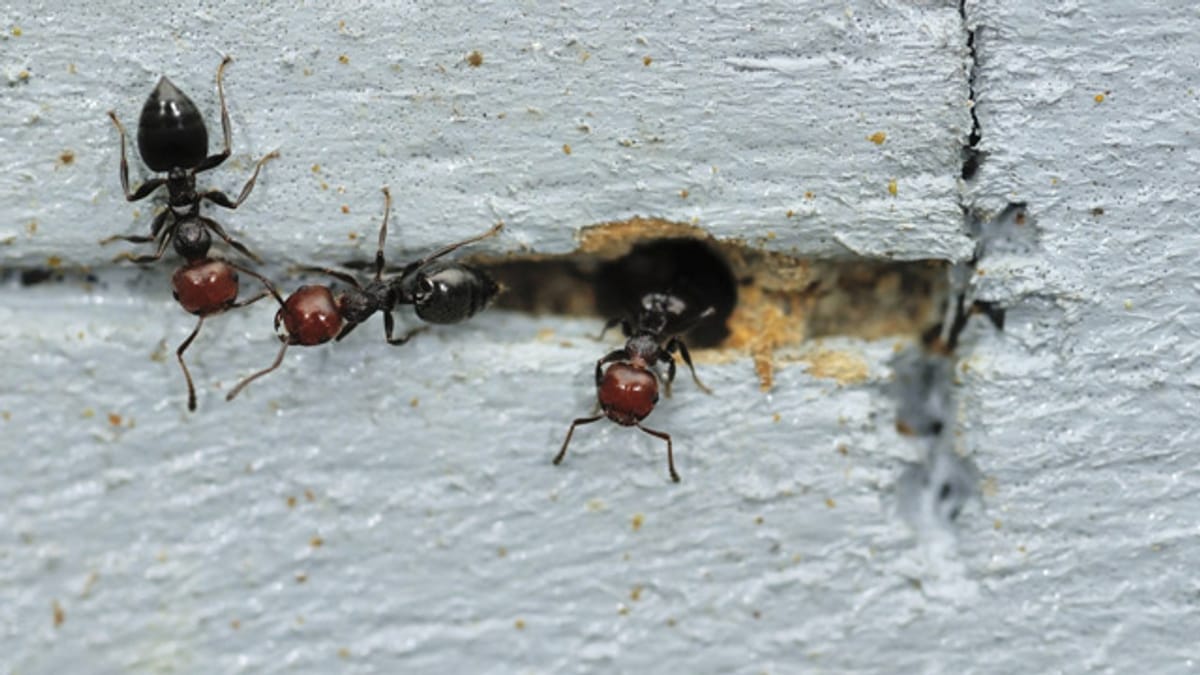
Unraveling the Mysteries of Bulldog Ant Navigation: Scent, Steps, and Sight
The Australian wilderness is home to some of the most fascinating creatures, and among them are the formidable Bulldog Ants (genus Myrmecia), also known as Bull Ants. These large, aggressive ants are renowned for their powerful sting and incredible hunting prowess. But beyond their fearsome reputation lies an equally impressive feat of biology: their uncanny ability to navigate vast, complex terrains and consistently find their way back to their subterranean nests. For those curious, "wie finden bulldoggen ameisen zurück in ihr nest" – how do these remarkable insects accomplish such a navigational marvel?
The answer isn't simple, but rather a sophisticated symphony of sensory inputs and internal calculations. Bulldog Ants employ a multi-faceted approach, combining invisible chemical trails, an internal 'step counter,' and a remarkable reliance on visual cues to guide them home. This intricate system allows them to forage efficiently, even when carrying heavy loads, ensuring the survival and prosperity of their colony.
The Formidable Bulldog Ant: More Than Just a Pretty Sting
Before diving into their navigational genius, it's essential to understand what makes Bulldog Ants so unique. These aren't your average garden ants. They are among the largest ant species globally, with some workers reaching over an inch in length. Predominantly found across Australia, they are solitary hunters, often foraging individually rather than in massive coordinated columns like many other ant species. Their nests, often excavated deep underground beneath stones, logs, or in loose soil, can extend several meters deep, housing complex tunnel systems and chambers.
One defining characteristic, crucial to their navigation, is their exceptionally well-developed vision. Unlike many nocturnal or subterranean ant species that rely heavily on chemical cues in perpetual darkness, Bulldog Ants are highly active during the day. Their large, multifaceted compound eyes are particularly adept at discerning shapes, patterns, and movement in their surroundings. This visual acuity sets them apart and plays a significant role in their sophisticated homing strategies.
The Invisible Roadmap: Pheromone Trails
Like a vast majority of ant species, Bulldog Ants leverage the power of chemical communication, specifically through pheromones, to mark their paths. These invisible scent markers act as a 'duftstraße nach hause' – a fragrant road home – guiding individual ants and, to a lesser extent, facilitating communication within the colony.
- Laying the Trail: As a Bulldog Ant ventures out from the nest in search of food, it continuously deposits tiny amounts of pheromone from specialized glands onto the substrate. This creates a chemical signature, a unique scent corridor leading away from and back to the nest.
- Following the Scent: On its return journey, the ant's antennae, equipped with highly sensitive chemoreceptors, detect these pheromones. The concentration gradient of the scent helps the ant determine the correct direction, leading it back towards the nest entrance.
- Reinforcement and Information: While Bulldog Ants are more solitary in their foraging compared to other species, repeated successful foraging trips over the same path can reinforce the pheromone trail, making it stronger and potentially indicating a productive foraging ground. This chemical information can subtly influence other workers, though not forming the distinct "ant highways" seen in mass-foraging species.
However, pheromone trails have their limitations. They can be easily disrupted by environmental factors such as heavy rain, strong winds, or even the activities of other animals. When a trail is disturbed, ants can appear temporarily disoriented, highlighting the need for alternative navigation systems. This is where the Bulldog Ant's other remarkable abilities come into play.
Nature's Built-in GPS: Path Integration and the "Step Counter"
Imagine having an internal GPS that constantly tracks your position relative to a starting point, even without external signals. This is precisely what scientists believe ants possess, a phenomenon known as path integration or "dead reckoning." It's a sophisticated internal "step counter" that allows them to continuously compute their position and the direct bearing back to their nest.
- How it Works: As an ant moves, it keeps a running tally of its steps, factoring in both distance and direction. It processes information about its turning angles and the length of each leg of its journey, integrating these measurements into a mental map that continually updates its "home vector" – the straight-line path back to the nest.
- The "Stilt" Experiment: One of the most compelling pieces of evidence for this internal system comes from ingenious experiments. Researchers attached tiny stilts to the legs of foraging ants, effectively lengthening their stride. On their return journey, these "long-legged" ants consistently overshot their nest entrance, walking a distance proportional to the added length. Conversely, ants whose legs were shortened walked too short, stopping prematurely before reaching the actual entrance. This demonstrated that ants aren't just following a simple path, but are actively measuring and calculating their travel distance based on their own locomotion.
- Precision and Limitations: Path integration is incredibly precise over short to moderate distances and is particularly useful when visual or chemical cues are absent or unreliable. However, like any dead reckoning system, errors can accumulate over very long or winding journeys. This inherent drift necessitates other navigational aids to correct the course and ensure accurate homing. To learn more about this incredible internal system, explore Bulldog Ants' Internal GPS and Visual Navigation.
Masters of Visual Navigation: Seeing Their Way Home
While many ant species navigate primarily by scent, Bulldog Ants stand out due to their exceptional reliance on vision. Their large, well-developed compound eyes grant them an unparalleled ability among ants to perceive and interpret their surroundings visually. This allows them to create a mental "visual map" of their environment, much like humans use landmarks.
- Landmark Orientation: Bulldog Ants actively memorize prominent features in the landscape surrounding their nest. These "landmarks" can be anything from distinct rocks, particular trees, fallen logs, or even subtle changes in ground elevation. They learn the spatial arrangement of these features, essentially building a mental snapshot of the nest's vicinity.
- Scanning the Horizon: When returning to the nest, especially as they get closer, Bulldog Ants often pause. During these stops, they elevate their heads and perform rapid scanning movements, rotating their bodies to take in a panoramic view of the environment. This "visual scan" allows them to compare the current view with their memorized visual map, helping them to reorient themselves and confirm their direction.
- Sky Compass: Beyond terrestrial landmarks, many insect navigators, including ants, are known to use the patterns of polarized light in the sky as a celestial compass. Even when the sun isn't directly visible, the polarization of light provides a consistent directional cue, which can be invaluable for maintaining a straight course over longer distances.
The combination of their sharp eyesight and the ability to process complex visual information makes Bulldog Ants "visual pros" among their hymenopteran relatives. This robust visual system provides a powerful backup and refinement mechanism to their pheromone trails and path integration.
Synergistic Navigation: A Multi-Sensory Masterpiece
The true genius of Bulldog Ant navigation lies not in any single method, but in the sophisticated interplay and integration of all three. They don't rely on just one sense; instead, they employ a hierarchical or parallel system where different cues are weighted and used depending on the context and reliability of the information.
- Redundancy and Reliability: Each navigational system has its strengths and weaknesses. Pheromones are great for established, short-distance routes but are vulnerable to disruption. Path integration provides a constant homing vector but accumulates errors over distance. Visual cues offer precise orientation in familiar terrain but require good visibility and can be confusing in novel environments. By combining them, Bulldog Ants achieve remarkable redundancy and reliability. If one system fails or becomes less reliable, others can compensate.
- Context-Dependent Switching: It is believed that ants can prioritize different cues based on their needs. For instance, in the initial stages of a foraging trip, path integration might be the primary mechanism for maintaining a general direction. As they approach a potential food source, chemical cues might become more prominent. On the return journey, especially near the nest, visual landmarks are critical for precise localization, refining the coarser direction provided by path integration.
- Learning and Adaptation: Young ants likely learn these complex navigational strategies through experience. Repeated journeys help them build more detailed visual maps and reinforce the neural pathways associated with path integration. This adaptive learning allows them to optimize their foraging routes and improve their homing accuracy over time. To delve deeper into these intricate strategies, consider exploring Decoding Bulldog Ants' Nest Finding Strategies.
Conclusion
The question of "wie finden bulldoggen ameisen zurück in ihr nest" reveals a truly awe-inspiring display of natural engineering. These formidable insects, often underestimated in their cognitive abilities, demonstrate a profound understanding of their environment through a blend of chemical communication, an innate 'step counter,' and sophisticated visual mapping. Their ability to integrate these diverse sensory inputs into a coherent navigational strategy not only ensures their individual survival but also contributes to the thriving success of their colonies across the rugged Australian landscape. It serves as a powerful reminder of the complex and elegant solutions that evolution has crafted in the natural world, urging us to look closer and appreciate the intelligent design in even the smallest of creatures.