The Marvel of Mini-Navigation: How Bulldog Ants Find Their Way Home
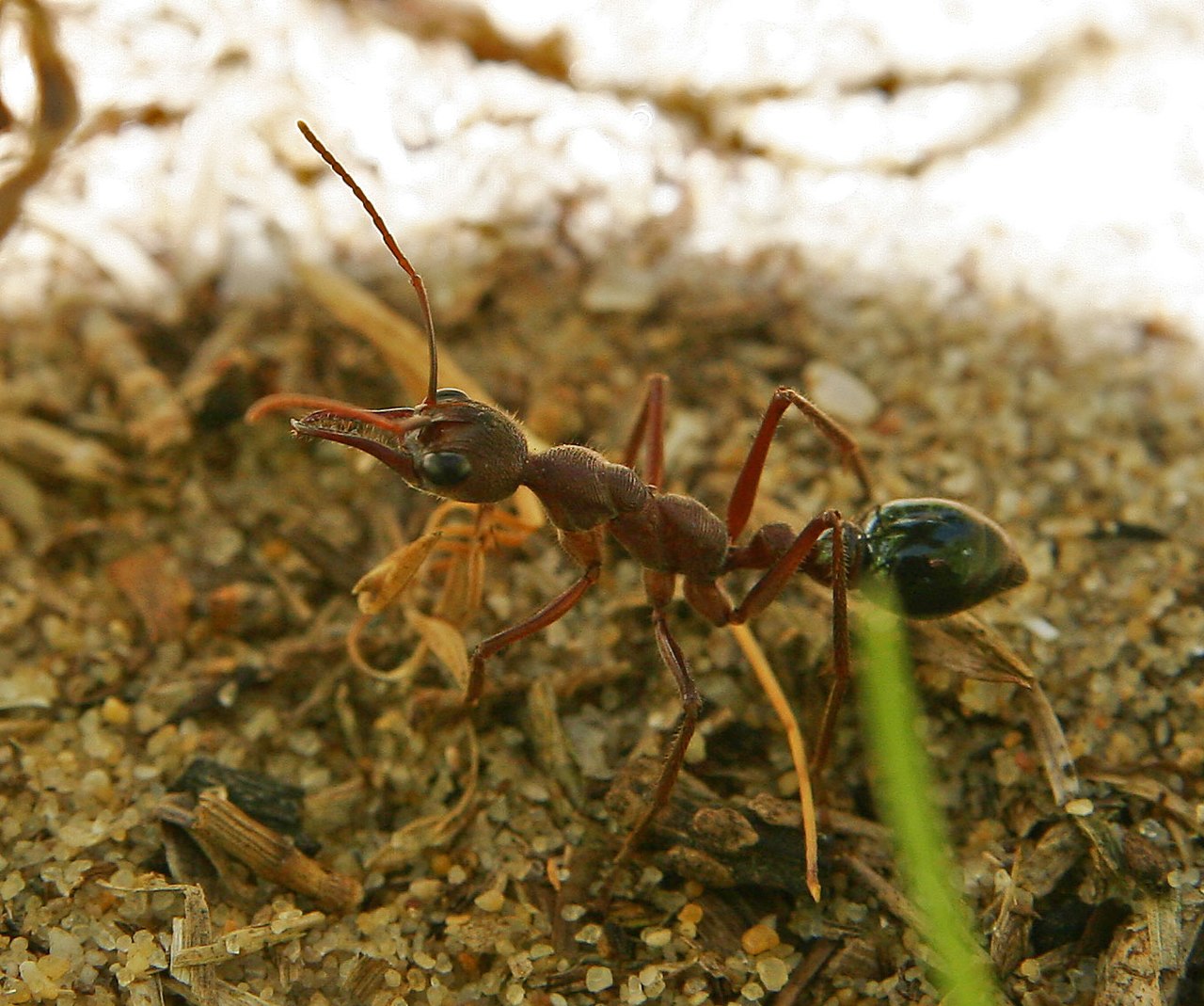
Imagine navigating a vast, ever-changing landscape without a GPS, a map, or even a clear line of sight to your destination. For many creatures, this is an everyday reality. Among the most impressive navigators in the insect world are Bulldog Ants (genus Myrmecia), also known as Bull Ants. These formidable Australian insects, with their powerful sting and aggressive nature, exhibit a highly sophisticated suite of strategies to ensure they always find their way back to their underground nests after a foraging expedition. The question of wie finden Bulldoggen Ameisen zurück in ihr Nest – how Bulldog Ants find their way back to their nest – reveals a fascinating blend of chemical cues, internal tracking systems, and sharp visual memory.
Far from relying on a single method, these ants employ a complex, multi-modal navigational system, adapting their techniques based on the environment, distance, and task at hand. Their ability to integrate diverse sensory information allows them to overcome challenges that would leave many other species hopelessly lost.
Decoding the Bulldog Ant's Navigational Toolkit
Bulldog Ants are not your average garden variety ants. They are large, visually acute, and often solitary foragers, venturing significant distances from their nests in search of food. Their nests, often hidden under stones, logs, or in loose soil, can extend several meters deep, making the entrance a tiny, critical target in a sprawling world. This necessity has driven the evolution of exceptional navigational prowess, primarily relying on three intertwined mechanisms:
- Pheromone Trails: Invisible highways marked by chemical scents.
- Path Integration (Internal Pedometer): An internal "step counter" combined with directional memory.
- Visual Landmarks: Remembering and recognizing key features in their environment.
Each of these strategies plays a crucial role, but it is their seamless integration that truly sets Bulldog Ants apart as master navigators.
The Scented Road Home: Pheromone Trails
Like many other ant species, Bulldog Ants leverage the power of chemical communication to establish invisible roadways. These are known as pheromone trails, and they serve as an essential guidepost for returning foragers. When a Bulldog Ant ventures out from the nest, it may release specific pheromones from glands onto the ground. This creates a subtle, species-specific scent trail that marks its path.
Upon finding food or simply needing to return, the ant can follow this very same trail back to the nest. The intensity of the pheromone trail can even communicate information about the richness of a food source or the frequency of use, with more frequently used or lucrative paths becoming more strongly marked. This collective intelligence leads to the formation of "ant highways," where multiple workers reinforce the same profitable routes.
However, pheromone trails are not without their vulnerabilities. Environmental factors such as rain, strong winds, or even physical disturbances (like a passing animal or human intervention) can disrupt or erase these delicate chemical messages. When a trail is broken, ants might appear disoriented, frantically searching for the lost scent. In such scenarios, their other navigational tools come to the forefront, demonstrating the adaptive strength of their multi-pronged approach. This reliance on a chemical compass is a fundamental aspect of Bulldog Ant Navigation: Scent, Steps, and Sight.
The Ant's Internal GPS: Path Integration and the Pedometer Principle
Perhaps one of the most remarkable aspects of Bulldog Ant navigation is their capacity for path integration, often referred to as an internal pedometer or a built-in GPS. This sophisticated system allows an ant to continuously track its position relative to its starting point (the nest) by monitoring the distance and direction it has traveled since leaving home. Essentially, it's an unconscious running tally of every turn and every step.
Scientific experiments have provided compelling evidence for this astonishing ability. In famous studies, researchers manipulated ants by either attaching tiny "stilts" to their legs, making them artificially taller, or by trimming their legs, shortening them. When these modified ants were allowed to forage and then instructed to return to their nest using only their internal path integration system (e.g., by covering their visual cues), the results were fascinating. Ants with stilts overshot their nest by approximately the extra length of their steps, while those with shortened legs stopped short. This demonstrated that ants indeed count their steps and integrate this information with their sense of direction to calculate a direct route home.
This internal compass and odometer are incredibly valuable, especially when external cues like pheromone trails are weak or non-existent. It provides a robust, self-contained method for estimating the direct path back to the nest, even after convoluted foraging routes. To learn more about this incredible ability, explore Bulldog Ants' Internal GPS and Visual Navigation.
Masters of the Landscape: Visual Navigation and Landmark Recognition
What truly distinguishes Bulldog Ants from many other ant species is their highly developed visual system and significant reliance on visual cues for navigation. Unlike many ants that primarily navigate by smell or touch, Bulldog Ants possess large, complex compound eyes, which grant them exceptional visual acuity for an insect. They are, in essence, the visual professionals of the ant world.
As they move through their environment, Bulldog Ants actively "memorize" significant landmarks. These can be anything from prominent rocks, trees, roots, and distinctive plant formations to subtle changes in terrain or horizon lines. They don't just see these features; they create a sort of mental or cognitive map, understanding the spatial relationship between these landmarks and their nest entrance. Observations in the field show ants pausing, performing characteristic "scanning" movements with their heads, taking in the panoramic view to reorient themselves using these learned visual patterns.
This visual memory allows them to fine-tune their path integration, especially in the final stages of approaching the nest, or to re-establish their bearing if other cues fail. In complex environments, where scent trails might be sparse and path integration less precise over long distances, visual navigation becomes paramount, acting as a critical layer of accuracy and redundancy.
The Symphony of Senses: An Integrated Approach to Nest Finding
Ultimately, the secret to how Bulldoggen Ameisen zurück in ihr Nest finden lies not in a single strategy, but in the sophisticated integration of all three. These ants are not just following a scent, or counting their steps, or looking at a tree; they are doing all of this simultaneously, weighing and prioritizing information based on the context.
For instance, an ant might use its path integration system to get a general bearing back to the nest after a long, winding foraging trip. As it gets closer, it might pick up faint pheromone trails laid by itself or other ants, which help refine its direction. In the immediate vicinity of the nest, its sharp visual memory of specific stones or plants surrounding the entrance provides the final, precise guidance needed to slip back home. This adaptability makes their navigation incredibly robust, allowing them to succeed in diverse and challenging conditions.
Conclusion
The navigational abilities of Bulldog Ants offer a humbling glimpse into the wonders of the natural world. Far from being simple creatures, they employ a highly advanced, multi-sensory system to accomplish the critical task of returning to their nest. Through the intricate interplay of chemical signals, an internal pedometer, and remarkable visual memory, these formidable insects demonstrate an unparalleled capacity for orientation. Understanding these strategies not only deepens our appreciation for insect intelligence but also provides fascinating insights into the fundamental principles of navigation that are, in some ways, mirrored even in our own advanced technologies.